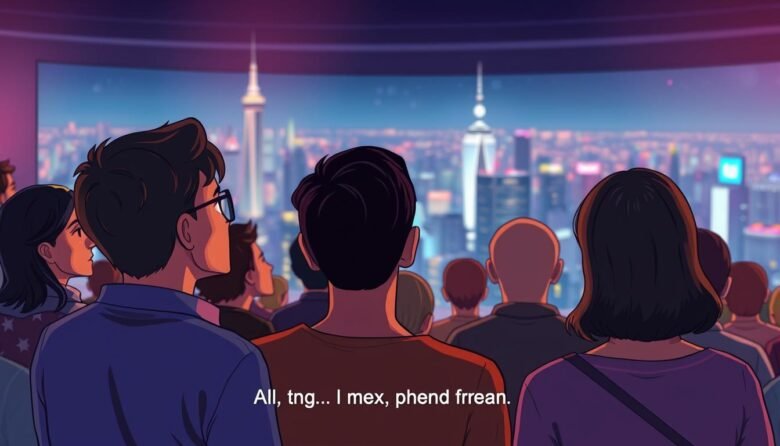
The digital age has completely changed how we create and share media. Streaming services and online platforms now connect creators with viewers everywhere. This new landscape makes it possible to share stories across borders.
Text translations at the bottom of the screen have become essential tools. They break down language barriers that once limited entertainment. Now, people everywhere can enjoy the same shows and movies.
The market for these text translations is growing fast. It was worth nearly $300 million in 2021. Experts predict it will reach $500 million by 2028. That’s a growth of about 10% each year.
This technology helps smaller creators too. They can reach international viewers without expensive dubbing. It makes sharing content across the world more affordable and effective.
Key Takeaways
- Digital platforms make it easy to share media globally
- Text translations remove language barriers
- The translation market is growing rapidly
- Streaming services depend on these tools
- Small creators benefit from wider distribution
- Viewers enjoy more diverse entertainment options
- Cross-cultural understanding improves through shared stories
The Evolution of Subtitle Culture in Entertainment
Screen text has evolved from specialized utility to mainstream viewing preference. This transformation represents one of entertainment’s most significant changes in recent years.
From Niche Accessibility to Global Standard
What once served primarily for hearing accessibility now dominates modern viewing habits. Young viewers especially embrace this feature, with 80% of 18-25 year-olds using text translations regularly.
Streaming services normalized this practice through easy activation features. Single-click options made the technology accessible to everyone.
Historical Impact on International Media
The entertainment industry witnessed rapid adoption across major platforms. Hulu’s journey from 4% captioned content in 2009 to 100% coverage demonstrates this shift.
This change allowed international movies and shows to find global viewers more easily. Content creators now consider text translations essential rather than optional.
The media landscape transformed as subtitles became expected features. This evolution reflects deeper changes in how people consume entertainment across different platforms.
Breaking Language Barriers with Subtitles
In today’s interconnected world, language differences no longer limit entertainment consumption thanks to innovative text translation tools. These tools open doors to international content that was once inaccessible.
Enhancing Viewer Comprehension and Engagement
Text translations do more than just translate languages. They help viewers understand complex dialogue and accents. Even native speakers benefit from this visual support.
Many people use these tools when audio quality is poor. They also help with fast-paced shows and complicated storylines. This improves overall understanding and enjoyment.
Inclusion and Accessibility for Diverse Audiences
These tools are essential for people with hearing challenges. They ensure everyone can enjoy entertainment equally. This commitment to accessibility makes content available to wider groups.
Surveys show that unclear audio is the main reason people turn on text translations. They help viewers follow complex names and places in shows. This creates a more inclusive experience for all.
Subtitle Culture, Audience Reach: Expanding Global Markets
Modern content distribution strategies leverage text translations to overcome geographical limitations efficiently. This approach allows creators to test new territories without massive upfront investments. The strategy has proven effective across various media formats.
Unlocking New Demographics and Regions
Text translations provide a cost-effective gateway to international viewers. Unlike expensive dubbing processes, this method offers similar market access at a fraction of the cost. Creators can now connect with diverse groups across borders.
Major streaming services have built their expansion models around this technology. Platforms like Netflix and YouTube use multilingual options to serve global audiences. This approach has shown viewership increases of 40-80% when implemented effectively.
Smaller creators benefit significantly from this democratized access. They can compete in markets previously dominated by large studios. The ability to test multiple languages helps identify promising regions for future growth.
Technical and Cultural Aspects of Effective Subtitle Creation
Behind every seamless viewing experience lies a complex process of linguistic adaptation and technical formatting. Creating quality text translations requires balancing multiple factors simultaneously.
Balancing Professional Translation with AI Tools
Choosing the right approach for translation work involves careful consideration. Human professionals bring deep cultural understanding to complex projects. They excel at handling idioms and emotional tone.
AI tools offer speed and cost efficiency for large-scale content. However, they may miss subtle cultural references. Many teams now use a hybrid way that combines both methods.
Navigating Cultural Nuances in Translation
Effective translation goes beyond literal word conversion. It requires adapting humor, slang, and local expressions. This ensures the original intent reaches new audiences.
Best practices include testing with native speakers from target regions. This helps identify potential misunderstandings before release. The goal is natural-sounding dialogue that feels authentic.
Technical standards also impact viewer satisfaction. Proper timing, font choices, and positioning affect readability. Following industry guidelines creates a better experience across different languages.
Subtitles Boosting Engagement Among Young Audiences
A new generation of media consumers has reshaped viewing habits entirely. Gen Z and Gen Alpha often watch videos with the sound off. This is common in classrooms, on buses, or late at night.
Captions are no longer just an accessibility tool. They are a preferred way to watch. YPulse found that 59% of Gen Z actively use them, even for content in their native language.
Appealing to Gen Z and Gen Alpha
Younger people multitask constantly. They might watch a video while texting or scrolling. Clear text helps them follow along without missing key details.
Preply reports that 70% of Gen Z rely on captions most of the time. This is a huge jump from older generations. The design of these text lines matters a great deal.
TikTok-style captions feel natural to them. These feature bold fonts and colors. Keywords are highlighted in rhythm with the audio.
Retaining Attention in a Fast-Paced Media Landscape
Attention spans are shorter now. Visual text tracks help keep viewers focused. Data shows people are 80% more likely to finish a video with captions.
Mobile viewing is a major factor. A stunning 92% of users watch videos with the sound off. This makes accurate text essential for comprehension.
Creators who adapt see better retention rates. Their content holds attention longer. This simple addition makes a significant difference.
SEO Benefits of Subtitles for Digital Content
Search engine optimization for video content has a secret weapon that multiplies discoverability exponentially. Properly implemented text translations transform spoken words into searchable content that algorithms love.
Improved Video SEO with Multilingual Captions
When you add captions in multiple languages, your video becomes searchable across different regions. Search engines index this text, making your content appear for relevant keywords worldwide.
This approach offers incredible growth potential. A single video can rank for terms in dozens of languages simultaneously. It’s the most efficient way to expand your international presence.
Increasing Organic Traffic Through Accurate Timings
Precisely timed captions significantly boost viewer retention metrics. Platforms like YouTube use these engagement signals as ranking factors.
Better retention creates a positive feedback loop for visibility. Content with quality text translations typically sees 40-80% more organic traffic. This strategy works across all major platforms.
Analytics from multilingual captions reveal which regions engage most with your content. This data guides smart localization investments for maximum reach.
Innovative Strategies to Enhance Subtitle Integration
A sophisticated blend of artificial intelligence and human insight is transforming how stories cross borders. This powerful combination helps content creators deliver better results across multiple languages.
Leveraging AI and Human Localization Expertise
Leading companies like Rev and VITAC have developed smart workflows. They use AI for initial translation work to save time. Then human experts review the output for cultural accuracy.
Doug Karlovits from VITAC notes an important shift in viewer behavior. People now actively seek out text translations instead of avoiding them. This change reflects evolving viewing habits.
The recommended approach starts with broad coverage across 15-20 languages. Analytics then identify which regions show the strongest engagement. This data-driven method ensures smart resource allocation.
Human localization specialists play a crucial role in maintaining quality. They ensure translations resonate authentically with local viewers. This hybrid approach balances efficiency with cultural sensitivity.
Content creators can implement these strategies at various scales. The key is finding the right balance between technology and human expertise for optimal results.
Embracing a Future of Global, Inclusive Storytelling
The journey of on-screen text has transformed it from a simple tool into a powerful bridge for global connection. This evolution marks a significant shift in how we share and experience stories.
The market for this technology is projected to grow from $300 million to nearly $500 million by 2028. This growth shows how vital these tools have become. They are now strategic necessities for content creators aiming for worldwide success.
Looking ahead, we see a future where text integration begins at the creative stage. Imagine content designed with text as a visual element from the start. This approach enhances the viewer experience for everyone.
Ultimately, this progress points toward a more connected world. It allows creators to share their work across borders. It helps build understanding between different cultures, making content accessible to all.